
Keeping your house tidy with kids can sometimes feel like an impossible task. You tidy the living room, turn around, and somehow there are toys on the floor, snacks on the sofa, and a trail of clothes leading down the hallway.
And if you’re a busy parent, the last thing you want is to spend every spare minute picking up after everyone else.
The good news is that you don’t need a spotless home to feel organized. The trick is to make tidying easier, reduce the amount of stuff that needs putting away, and build a few simple habits into your family’s day.
Whether you have toddlers pulling everything out of cupboards, school-age children leaving toys everywhere, or older kids who seem to think dirty laundry magically disappears, these practical tips will help you keep your house tidier without constantly cleaning.
You May Also Like:
- Deep Cleaning Checklist Calendar
- Beautiful Kitchen Organization Ideas
- How to Organize All Your Important Documents

17 Tips for a Tidy House With Kids
1. Stop Trying to Keep Everything Perfect
The first step to keeping your house tidy with kids is to accept that your home will probably look lived-in most of the time.
Children play, eat, create, explore, and move from one activity to another. That’s normal, and it doesn’t mean you’re failing at keeping your home under control.
Instead of aiming for a perfectly clean house all day, focus on keeping things manageable. That might mean:
- The kitchen worktops are clear enough to prepare meals.
- There’s somewhere comfortable to sit in the living room.
- Dirty laundry makes it into a basket.
- You can put toys away without a huge struggle.
- The floor is clear enough to walk through safely.
These small things make a home feel much tidier without requiring you to clean constantly.
A useful rule: Aim for a home that’s easy to reset, rather than one that never gets messy.
2. Give Everything a Home
One of the biggest reasons clutter builds up is that things don’t have an obvious place to go.
If toys, books, shoes, craft supplies, and everyday essentials don’t have designated homes, putting them away becomes a bigger job than it needs to be.
Start by looking at the items that regularly get left lying around. Then decide where each category should live. For example:
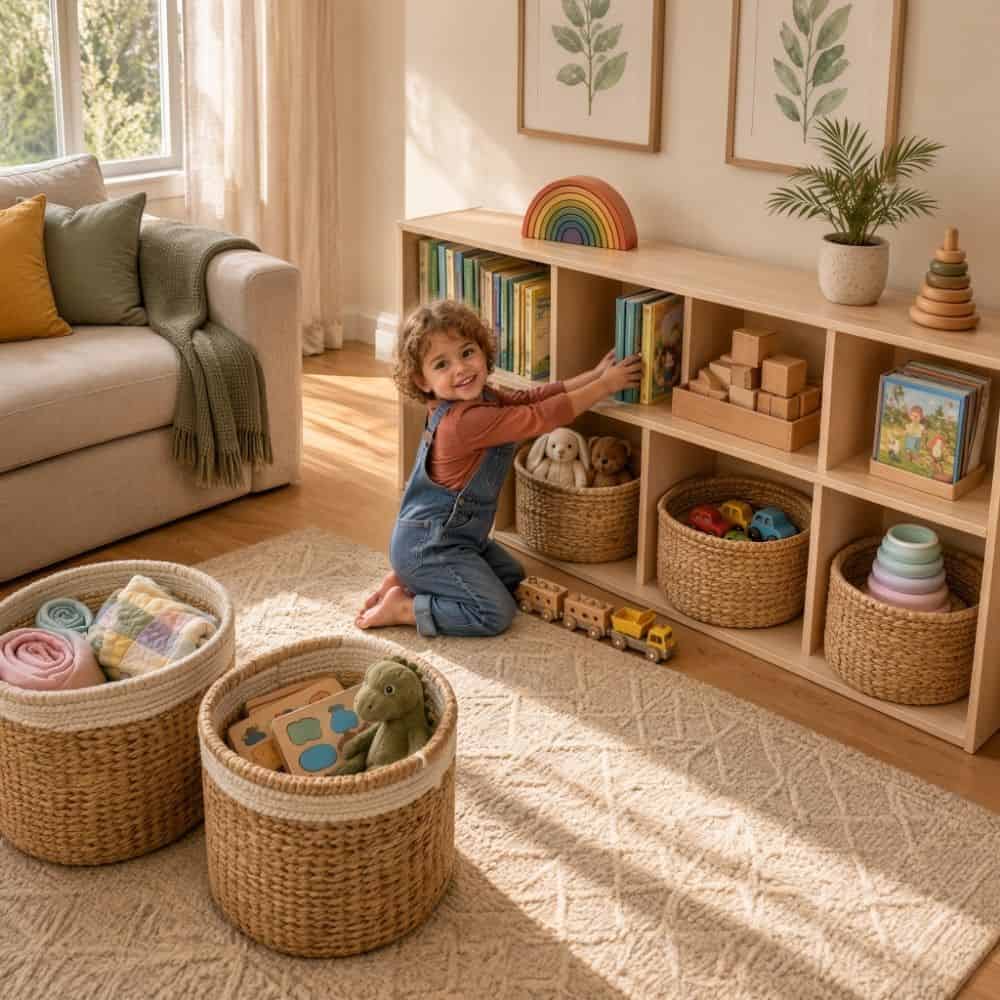
- Toys go in labeled boxes or baskets.
- Books go on a shelf or in a book basket.
- Shoes go in one designated spot near the door.
- Coats and bags go on hooks.
- Put craft supplies in a single cupboard or container.
- Put remote controls in a small living room basket.
- Put dirty clothes straight into laundry baskets.
Keep storage close to where the items are actually used. If the children play in the living room, having a toy basket there makes more sense than expecting them to carry everything upstairs after every game.
The easier it is to put something away, the more likely it is to happen.
3. Declutter Toys and Children’s Belongings
The more things you own, the more you have to tidy.
If your house feels permanently cluttered, the problem might not be your cleaning routine. You might simply have more toys, clothes, books, and miscellaneous items than your available storage can comfortably hold.
You don’t need to declutter everything in one weekend. Start with one small category. Try working through:
- Toys your children have outgrown.
- Broken toys or games with missing pieces.
- Clothes that no longer fit.
- Old artwork and school papers.
- Books nobody reads anymore.
- Duplicate toys or items that rarely get used.
- Random items that no longer have a purpose.
If your children are old enough, involve them in deciding what to keep, donate, or pass on. For younger children, start with obvious rubbish, broken items, or things you know they no longer use.
If getting rid of toys feels overwhelming, try a toy rotation system instead. Keep some toys accessible and store the rest away. Swap them every few weeks to make the available toys feel fresh without constantly bringing more things into the house.
4. Use Baskets to Make Tidying Faster
Storage baskets are useful because they make it possible to tidy quickly without having to organize every little item perfectly.
Keep a few baskets in the areas where mess tends to accumulate. For example, you could have:
- A toy basket in the living room.
- A basket for books and magazines.
- A basket for soft toys.
- A basket for items that belong in other rooms.
- A basket for hats, gloves, and other seasonal accessories.
When the room gets messy, everyone can put items into the appropriate basket.
For the basket of things that belong elsewhere, take a few minutes each day to return the contents to their proper homes. Otherwise, the basket can become another permanent pile of clutter.
You don’t need matching baskets or expensive storage systems. A cardboard box, an existing laundry basket, or a reusable shopping bag can work just as well.
5. Create a Simple Daily Tidy-Up Routine
You don’t need to clean the entire house every day. A few short resets can prevent mess from becoming overwhelming. Choose two or three moments in your normal routine when tidying makes sense. For example:
Morning reset
- Put dirty clothes in the laundry basket.
- Make the beds if you like doing so.
- Clear breakfast dishes.
- Put away anything left out from the previous evening.
Afternoon reset
- Put toys and craft supplies away before starting something new.
- Clear the main living area.
- Put away shoes, coats, and bags.
Evening reset
- Clear kitchen worktops.
- Load or wash the dishes.
- Put toys back in their baskets.
- Wipe the dining table.
- Prepare anything needed for the following morning.
You don’t have to follow this exact routine. Choose the tasks that make the biggest difference in your home. The important thing is to keep each reset short enough that it feels achievable, even on busy days.
6. Teach Kids to Tidy Up After Themselves
Children don’t automatically know how to keep a room tidy. They need to learn the skill gradually, just like they learn to dress themselves or brush their teeth.
Start with simple, age-appropriate expectations.
Young children might be able to put soft toys in a basket, place books on a shelf, or carry their plate to the kitchen.
Older children can take responsibility for putting away their belongings, managing their laundry, and keeping their own spaces reasonably tidy.
Try to make instructions specific. Instead of saying, “Clean this room,” try:
- Put the building blocks in the box.
- Take your clothes to the laundry basket.
- Put the books back on the shelf.
- Clear the table before we start the next activity.
Vague instructions can feel overwhelming, while a clear task gives children a starting point. You may need to help them at first, but consistency helps them learn what is expected.
7. Use a Five-Minute Family Tidy
A five-minute tidy is a simple way to get everyone involved without turning cleaning into a major event. Choose a time of day, set a timer, and ask everyone to help put things back where they belong.
You might focus on the living room one day and the kitchen or hallway the next. During those five minutes, concentrate on the obvious mess rather than trying to deep-clean. For example:
- Put toys in their baskets.
- Collect cups and plates.
- Return books to the shelf.
- Put stray clothes in the laundry basket.
- Clear the floor and main surfaces.
If your children enjoy a little competition, see how much you can put away before the timer rings. If competition causes arguments, simply work together.
Five minutes won’t transform a very messy house, but it can stop everyday clutter from building up indefinitely.
8. Make Tidying Part of Moving Between Activities
One of the easiest ways to reduce mess is to put things away before moving on to something else.
For example, if the children have finished painting and want to play a board game, encourage them to put away the paints and paper first.
You can use a simple rule: Finish one activity, tidy it away, then start the next.
This doesn’t mean every toy has to be put away the moment a child pauses playing. Some activities take place over several hours or days, and it’s fine to leave them out when there’s enough space.
The goal is to avoid having every activity in the house happening at once.
If your children are in the middle of an elaborate building project, designate a safe space where it can stay without spreading across the entire room.
9. Keep Cleaning Supplies Easy to Access
If you have to search for cleaning products every time you want to wipe a surface, you’re less likely to deal with small messes immediately. Keep suitable cleaning supplies organized and within reach for the adults in your household. For example, you might keep:
- Kitchen cloths near the kitchen.
- Bathroom cleaning products in a secure bathroom cupboard.
- A handheld vacuum or dustpan and brush in a convenient spot.
- Laundry supplies near the washing machine.
- A small supply of bin bags in an easy-to-reach location.
Keep cleaning products, medicines, and other hazardous items locked away or otherwise securely out of children’s reach.
Having the right tools nearby makes quick clean-ups easier. You can wipe a sticky table, deal with a small spill, or sweep up crumbs without turning it into a separate cleaning session.
10. Make the Kitchen Easier to Keep Tidy
The kitchen often becomes one of the messiest rooms in a family home because it’s used so frequently. Rather than trying to keep it spotless all day, focus on a few habits that keep the mess from becoming unmanageable.
Clear the worktops
Keep only the things you use regularly on the worktops. The less clutter there is, the easier it is to wipe them down.
Deal with dishes regularly
Put dishes in the dishwasher or wash them in batches throughout the day. If you don’t have a dishwasher, even washing a few items after meals can make a difference.
Create a snack area
If your children are old enough to help themselves safely, keep suitable snacks and cups in an accessible place.
This can reduce the number of cupboards being opened and items being scattered around while everyone looks for something to eat.
Clean as you go
While preparing meals, put ingredients away and wipe up obvious spills when practical. You don’t have to wash every utensil immediately, but small actions can reduce the after-dinner workload.
Finish with a quick evening reset
Clearing the sink, wiping the main worktops, and putting food away can make the next morning feel much less chaotic.
11. Stay on Top of Laundry Without Washing All Day
Laundry can feel never-ending when you have children, especially if clean clothes are left in baskets for days, and dirty clothes are scattered around the house.
You don’t need an elaborate laundry system. You just need a routine that works for your family. Try these simple habits:
- Put laundry baskets where clothes actually get changed.
- Encourage everyone to put dirty clothes straight into the basket.
- Wash smaller, manageable loads regularly.
- Fold or hang clothes as soon as you reasonably can.
- Give each family member a designated place for clean clothes.
- Encourage older children to put their own clothes away.
If folding everything immediately isn’t realistic, don’t let the perfect routine stop you from doing anything. A clean laundry basket for each family member can work as a temporary system, provided clothes don’t get mixed up and forgotten.
The aim is to keep dirty laundry moving through the system and prevent clean clothes from becoming another permanent pile.
12. Deal With Paperwork and Random Clutter
Not all household clutter comes from toys. Letters, receipts, school notices, packaging, and miscellaneous items can quickly cover every available surface.
Choose one place to collect paperwork that needs attention, such as a tray, folder, or small box. Then make a habit of dealing with it regularly.
- Recycle junk mail.
- Put important letters in a designated folder.
- Add appointments and events to your calendar.
- Keep school information in one place.
- Recycle packaging rather than leaving it on the worktop.
- Return everyday items to their designated homes.
Try not to create lots of different piles around the house. One organised collection point is easier to manage than paperwork spread across the kitchen table, hallway, and living room.
13. Make Bedrooms Easier to Maintain
Children’s bedrooms don’t need to look like show homes. They simply need to be functional, safe, and reasonably easy to tidy.
The best approach is to reduce the number of things that need putting away and make storage straightforward. Try:
- A toy box or basket for frequently used toys.
- A bookcase or book basket.
- Hooks for dressing gowns, bags, and coats.
- A laundry basket in an obvious location.
- Storage under the bed for suitable items.
- A clear surface for essential belongings.
Avoid making the system too complicated. If every small toy has a different storage compartment, tidying may take longer than the play itself.
For younger children, open baskets can be easier to use than drawers with complicated organizers. Older children may prefer a more specific system for their hobbies and belongings.
Choose what works for the child, not what looks best in a photograph.
14. Don’t Tidy the Same Things All Day
One of the most exhausting parts of keeping a family home tidy is feeling as though you have to put everything away the moment it appears. You don’t.
If your children are playing happily, you can usually leave the toys alone until they’re finished or until your next planned tidy-up.
The same applies to books, craft projects, and other activities that are being used throughout the day.
Instead of constantly interrupting what you’re doing to tidy, decide what needs immediate attention and what can wait.
Deal with safety and hygiene issues straight away. Reset general clutter at planned times.
For example, clean up a food spill, put perishable food away, and clear a dangerous trip hazard immediately. Toys scattered across a safe play area can wait until the activity ends.
This approach helps you avoid spending the entire day cleaning up little things while never feeling that the house is actually tidy.
15. Create a Reset Routine for the End of the Day
A short evening reset can make a noticeable difference to how your home feels the next morning. You don’t have to do everything. Choose a few tasks that make tomorrow easier. Your evening reset might include:
- Clearing the kitchen worktops.
- Putting away food.
- Loading the dishwasher or washing the dishes.
- Returning toys to their baskets.
- Collecting cups and plates from other rooms.
- Putting dirty clothes in the laundry basket.
- Preparing school or activity essentials for the next day.
Aim for around 10–15 minutes, depending on the amount of work and your family’s needs.
If you’re exhausted, do the essentials and leave the rest. A sustainable routine is more useful than a perfect one you can only manage occasionally.
16. Set Realistic Expectations for Your Children
Children have different abilities, personalities, and levels of independence. A routine that works for one family may not work for another.
A toddler may need you to tidy alongside them. A primary-school child may manage a few simple tasks with reminders. An older child may be ready to take responsibility for their own room and laundry.
Try to avoid expecting children to manage tasks they haven’t been taught or aren’t developmentally ready to handle.
If a child struggles with transitions, attention, or organizing their belongings, break the task into smaller steps and keep the routine predictable.
You could use a short written checklist or a few simple labels on storage baskets to make it easier to remember what goes where.
The goal isn’t to make children responsible for the entire house. It’s to help them gradually learn the everyday skills that make living together easier.
17. Know What You Can Let Go
Not every household task needs to be done every day. If you’re constantly behind, it may help to decide which jobs genuinely need daily attention and which can happen less frequently. For example:
Daily essentials
- Clear up food and kitchen mess.
- Deal with dirty dishes.
- Put away obvious clutter.
- Keep floors and walkways reasonably clear.
- Handle urgent laundry needs.
Weekly or occasional tasks
- Dusting less-used surfaces.
- Cleaning windows.
- Organizing cupboards.
- Sorting toys and paperwork.
- Deep-cleaning appliances.
- Washing curtains or other items that don’t need frequent cleaning.
Your schedule will depend on your home, family, pets, and personal preferences. The important thing is to stop treating every task as equally urgent.
A tidy home is not worth sacrificing all your rest and free time.
A Simple Daily Tidy Checklist for Busy Parents
If you don’t want to remember all these tips, start with this short checklist. Adjust it to suit your family, and ignore anything that doesn’t matter in your home.
Morning
- Put dirty clothes in the laundry basket.
- Clear breakfast dishes.
- Put away obvious items left out overnight.
During the day
- Tidy one activity before starting another, where practical.
- Deal with food mess and spills.
- Return frequently used items to their homes.
Evening
- Clear the kitchen worktops.
- Put away food and deal with dishes.
- Do a five-minute family tidy.
- Make sure the main walkways are clear.
You don’t have to complete every task every day. Think of this as a helpful guide, not another list to feel guilty about.
FAQs
How do I keep my house tidy when I have young children?
Keep the system simple: give everyday items an easy-to-reach home, reduce excess clutter, and use short tidy-up routines at predictable times. With young children, tidying together is often more realistic than expecting them to do it independently.
How can I get my kids to help tidy up?
Start with one clear, age-appropriate task, such as putting toys in a basket or carrying clothes to the laundry hamper. Show them what to do, tidy alongside them at first, and build the habit gradually.
How often should I tidy my house with kids?
A quick reset once or twice a day may be enough to keep everyday mess manageable. Deal with food spills and safety hazards straight away, but let ordinary play clutter wait until a planned tidy-up.
How do I keep my house tidy when I feel overwhelmed?
Choose one small area and set a short timer. Clear the most noticeable clutter first, then stop when the timer goes off. You don’t need to tackle the whole house at once.


Learning how to keep your house tidy with kids isn’t about finding a magical cleaning trick or becoming the sort of person who spends every evening scrubbing and organizing.
It’s about making your home easier to manage.
Give everyday items a home, reduce the clutter you don’t need, involve the children in age-appropriate tasks, and build a few short tidy-up routines into your day.
Most importantly, stop expecting your house to stay perfectly tidy while it’s being lived in.
Some days you’ll manage your usual routine. Other days you’ll do the bare minimum, and that’s fine. The aim is to create a home that works for your family, not a house that looks untouched.