Have you ever looked around your home and felt like you’ve fallen out of love with it? Maybe the rooms feel cluttered, the decor no longer suits you, or everyday mess makes it difficult to relax. Perhaps your home simply doesn’t feel as welcoming as it once did.
It happens. Our homes change as our families grow, our routines shift, and life gets busier. Sometimes, the space that once felt comforting starts to feel like another thing on our to-do list.
The good news is that you don’t need to renovate, buy new furniture, or spend a fortune on home decor to change how you feel about your home.
With a few thoughtful adjustments, small improvements, and a little attention to what makes you happy, you can start enjoying your home again.
You May Also Like:
- How to Spend Less Time Cleaning and Still Have a Clean Home
- How to Organize All Your Important Documents
- How to Keep Your House Tidy With Kids
15 Simple Ways To Fall Back In Love With Your Space
One small step at a time!
1. Figure Out What’s Making You Unhappy With Your Home
Before you start cleaning, decorating, or reorganizing, take a moment to think about what’s bothering you.
Is it the clutter on the kitchen counters? The laundry that never seems to disappear? A room that feels dark and uninviting? Or maybe your home no longer reflects who you are today.
You don’t have to fix everything at once. Identifying the biggest source of frustration can help you focus your efforts where they’ll make the most difference.
Try finishing this sentence: “I’d enjoy my home more if…”
Your answer might be something simple, like a clear dining table, a comfortable place to sit, or a bedroom that feels peaceful at the end of the day.
Choose one thing to work on first. You don’t need a complete home makeover to make your space feel better.
2. Start With One Small Area
When you’re unhappy with your home, it’s tempting to look at every room and feel that everything needs to change. That can quickly become overwhelming, especially when you’re already busy.
Instead, choose one small area and focus on it. You could:
- Clear and wipe down your bedside table.
- Tidy one kitchen counter.
- Make your sofa comfortable with a blanket and cushions you already own.
- Clear the clutter from your entryway.
- Give your bathroom sink a quick clean.
- Organize the shelf you see every morning.
The goal isn’t perfection. It’s to create one small space that makes you feel a little happier when you see it. Once you’ve improved that area, you can move on to another when you have the time and energy.
3. Declutter Without Trying to Become a Minimalist
Clutter can make a home feel stressful, particularly when surfaces are crowded, and you’re constantly moving things around to find what you need.
But loving your home doesn’t mean getting rid of everything you own.
You can keep sentimental objects, favorite books, collections, family photographs, and anything that makes your home feel personal. The goal is to make room for what you enjoy and reduce the items that get in your way.
Start with the areas that cause the most daily frustration. Ask yourself:
- Do I use this regularly?
- Does it have a place to live?
- Do I genuinely enjoy having it?
- Is it taking up space I need for something else?
Work in small sections rather than emptying an entire room or cupboard. A single drawer, shelf, or basket is enough for one decluttering session.
If you have children, remember that a lived-in family home will never look perfectly tidy all the time. You can make your home easier to manage without expecting it to look like a magazine.
4. Make Your Home Work Better for Your Everyday Life
Sometimes, the problem isn’t how your home looks. It’s how difficult it is to live in. Maybe shoes pile up by the door, the kitchen counters are always covered in things, or the laundry basket sits in an inconvenient place.
Small changes to your home’s layout and organization can make everyday life easier. For example:
- Put a basket near the entrance for shoes, hats, and other frequently used items.
- Keep cleaning supplies close to the rooms where you use them.
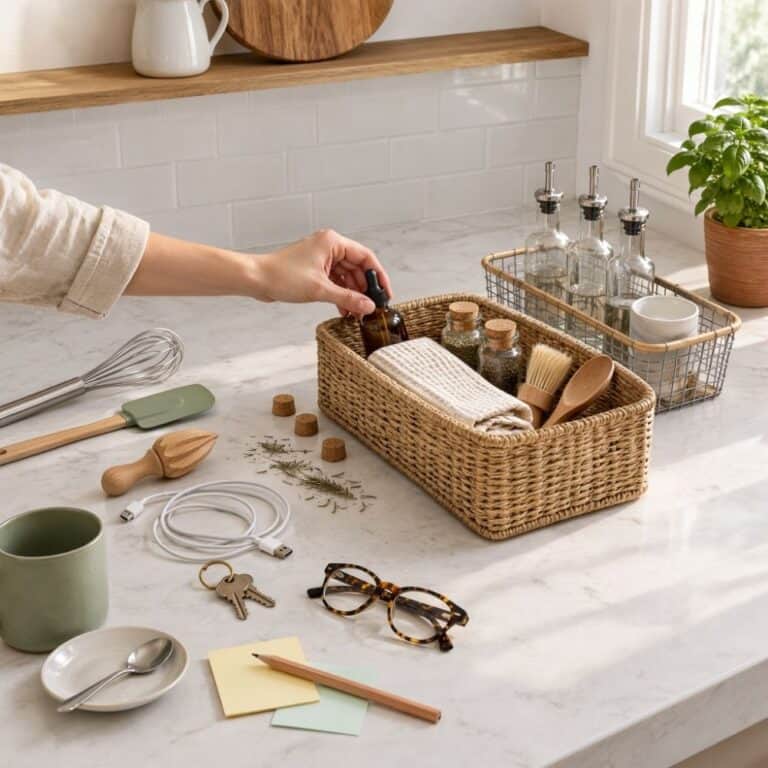
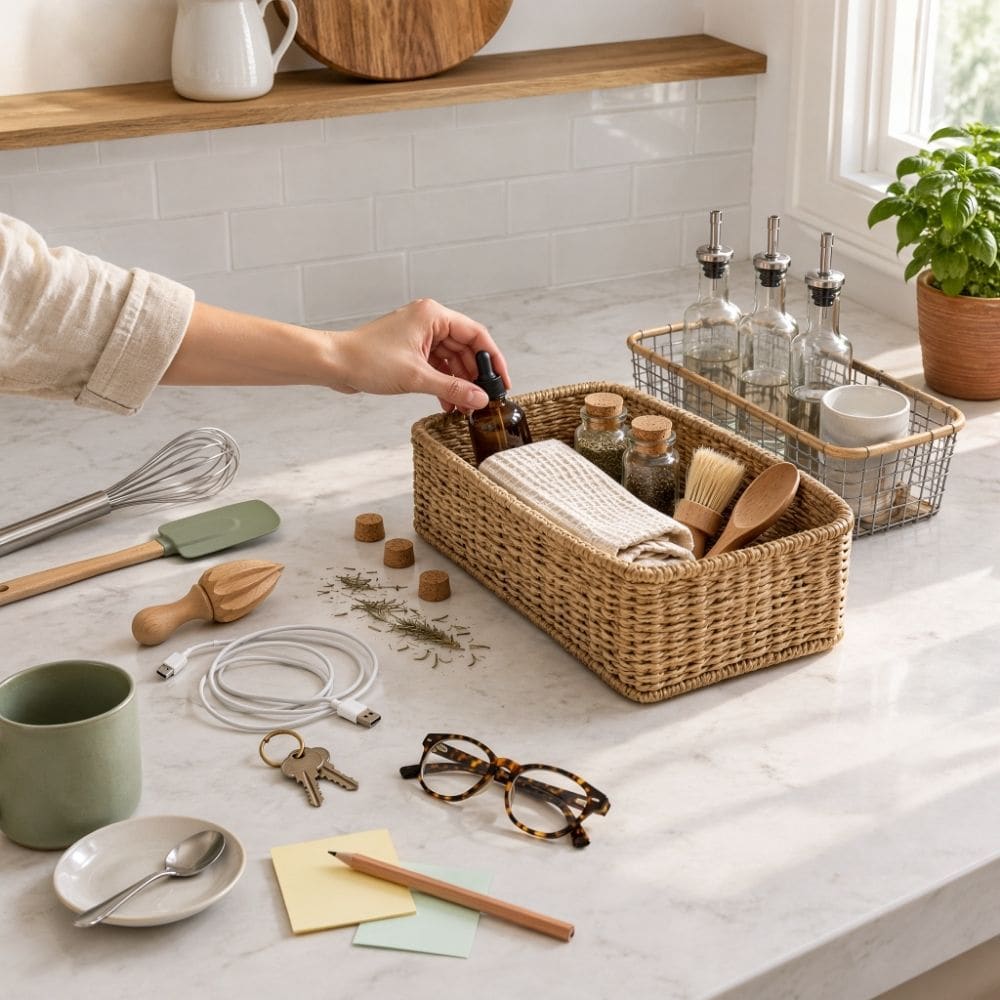
- Create a simple drop zone for keys, mail, and everyday essentials.
- Store children’s most-used toys in accessible baskets.
- Keep frequently used kitchen equipment within easy reach.
- Place a laundry basket where clothes naturally accumulate.
Think about what repeatedly frustrates you, and find a practical solution for each. A home that supports your daily routines often feels more comfortable than one that looks beautiful but is difficult to maintain.
5. Bring Back the Things You Used to Love About Your Home
Think back to a time when you felt happier in your home. What did you enjoy about it?
Perhaps you loved having fresh flowers on the table, reading on the sofa in the evenings, baking on weekends, or sitting by a sunny window with a cup of tea.
Those little pleasures can easily disappear when life becomes busy.
You don’t need to recreate your old routine exactly. Instead, find simple ways to bring back some of those enjoyable moments.
Try keeping a favorite book beside your bed, using your favorite mug every morning, playing music while you cook, or making time for a quiet cup of tea in a comfortable chair.
Your home should be more than somewhere to sleep, eat, clean, and store your belongings. It should also be a place where you can enjoy yourself.
6. Refresh Your Decor Without Buying Everything New
You don’t have to redecorate an entire room to make it feel different.
Before buying anything, look at what you already own. You may be able to create a fresh look simply by rearranging a few things. Try:
- Moving a lamp to a darker corner.
- Swapping cushions or blankets between rooms.
- Rearranging photographs or artwork.
- Displaying a favorite collection instead of keeping it hidden away.
- Moving a small piece of furniture to improve the layout.
- Clearing a crowded shelf and displaying fewer, more meaningful items.
- Bringing a plant or decorative object into a space that feels bare.
If you decide to buy something, choose one item that makes a noticeable difference rather than buying lots of small things that add to the clutter. You can also make gradual changes over time instead of trying to achieve a finished look immediately.
7. Make Your Home Feel More Welcoming
A welcoming home doesn’t need expensive furniture or carefully styled rooms. Often, small details make a space feel comfortable.
Consider the atmosphere you want to create. Do you want your living room to feel cozy and relaxed? Your bedroom to feel peaceful? Your kitchen to feel bright and inviting?
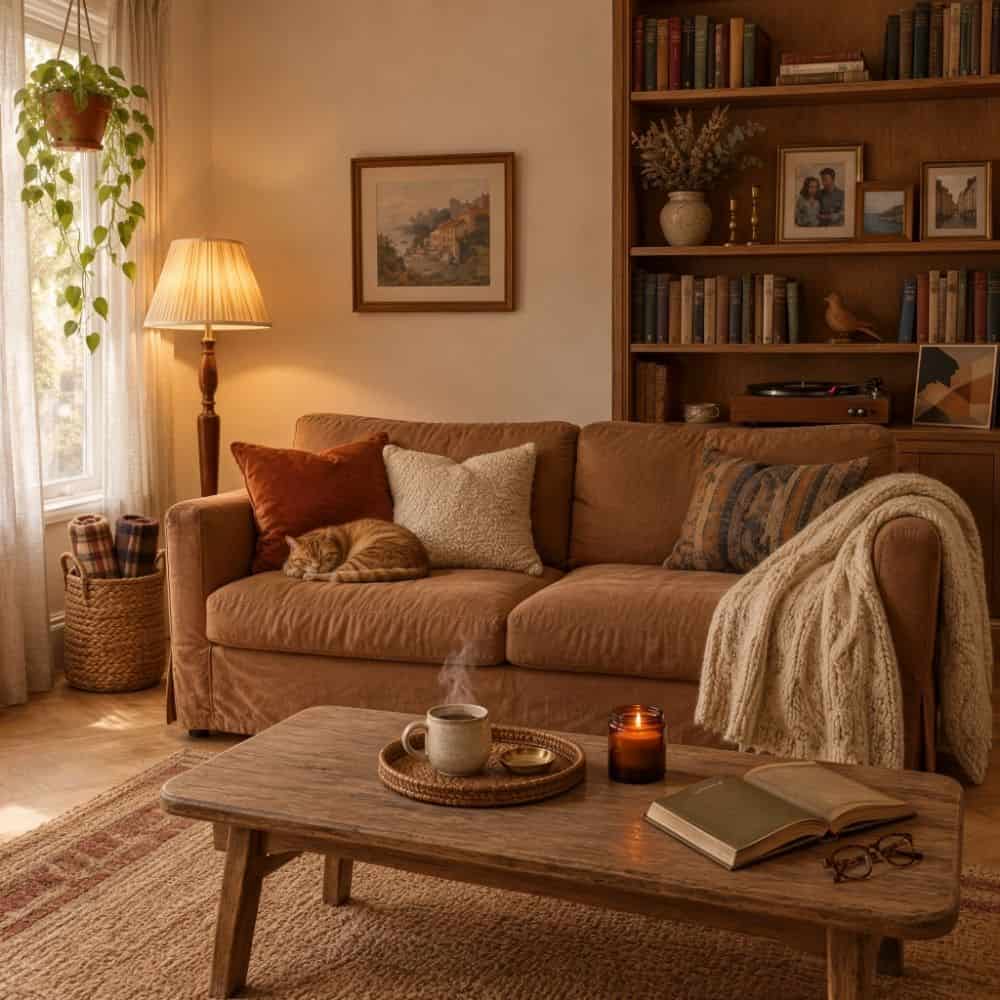
You can influence how a room feels with simple adjustments. For a cozier atmosphere, try warm lighting, soft blankets, comfortable seating, and a few favorite objects.
For a lighter, fresher feeling, open the curtains, clear unnecessary items from surfaces, and let natural light into the room.
For a more relaxing bedroom, remove distractions from your bedside table, make the bed comfortable, and keep the floor as clear as possible.
You can also use familiar scents, such as fresh laundry or a favorite room fragrance, if you enjoy them. Always follow product safety instructions, especially around children and pets.
The aim is to make your home feel pleasant to spend time in, not to create another decorating project.
8. Let Go of the Idea That Your Home Should Look Perfect
One of the quickest ways to stop enjoying your home is to compare it with other people’s homes.
Social media and home magazines often show carefully arranged spaces without the everyday mess that comes with actually living in them.
Real homes have laundry, dishes, toys, paperwork, and rooms that sometimes get untidy. Family life is messy, and that’s perfectly normal.
Your home doesn’t have to be spotless to be comfortable. It doesn’t need to follow the latest decorating trend, and not every room has to look finished.
Instead of asking whether your home looks perfect, ask whether it works for you.
Can you relax in your living room? Can you find what you need? Do you have somewhere comfortable to sit? Are there little things around you that make you happy?
Those things matter far more than achieving a picture-perfect home.
9. Create One Little Corner That Feels Like Yours
When you spend much of your time looking after other people, managing household tasks, and keeping everything running, it’s easy for your home to feel like it belongs to everyone except you.
Creating a small personal space can help you reconnect with your home. It doesn’t have to be an entire room. A comfortable chair, a corner of the bedroom, or a small area beside a window can be enough.
Make it somewhere you enjoy spending time. You might keep a book, a soft blanket, a favorite lamp, or a small collection of meaningful objects nearby. If space is limited, a bedside table or a single shelf can serve the same purpose.
Use this space for something you enjoy, whether that’s reading, listening to music, doing a puzzle, or simply sitting quietly for a few minutes.
Your home should make room for your needs, too.
10. Make Your Bedroom a Place You Want to End the Day
Your bedroom can have a surprisingly big impact on how you feel about your home. If it’s filled with laundry, unfinished jobs, and things that don’t belong there, it may be difficult to relax at the end of the day.
You don’t need a complete bedroom makeover. Start with the basics. Make the bed, clear the bedside tables, put away a few stray items, and make sure your bedding is comfortable.
If possible, remove things that constantly remind you of unfinished work. You might move paperwork to another area or keep laundry in a designated basket instead of letting it spread around the room.
Add one small touch that makes you happy, such as a favorite cushion, a warm lamp, or a photograph you love. A bedroom doesn’t need to be luxurious to feel like a comfortable place to rest.
11. Make Everyday Household Tasks Feel Less Draining
It’s difficult to enjoy your home when every room reminds you of something else that needs doing. Cleaning, laundry, cooking, tidying, and organizing can easily take over your time if you expect yourself to keep everything perfect.
Instead, aim for a manageable routine that keeps your home functional without requiring constant attention. You could try a simple daily reset:
- Spend five minutes clearing the kitchen counters.
- Put away items that have wandered into the wrong rooms.
- Deal with the most urgent dishes.
- Gather laundry into one place.
- Prepare one thing that will make tomorrow easier.
You don’t have to do every task every day. Choose the jobs that make the biggest difference to how your home feels.
It can also help to give yourself permission to stop when your allotted time is up. A short reset is still useful, even if the house isn’t completely tidy afterward.
For more practical ideas, see our guides to How to Spend Less Time Cleaning and Still Have a Clean Home and Quick 10-Minute Decluttering Tasks That Make a Big Impact.
12. Add Small Seasonal Touches
One way to make your home feel fresh without spending much money is to change a few details with the seasons.
This doesn’t mean buying new decorations every few months. You can use things you already own or make simple changes to suit the time of year.
In spring, open the windows when the weather allows, bring in fresh flowers, and lighten up your living spaces. In summer, make the most of natural light, enjoy outdoor seating if you have it, and keep rooms feeling fresh and uncluttered.
In autumn, bring out cozy blankets, warm-toned accessories, and favorite candles or safe alternatives. In winter, focus on soft lighting, comfortable seating, warm textures, and little things that make staying indoors more enjoyable.
Even something as simple as changing a cushion cover, displaying seasonal flowers, or moving a blanket to your favorite chair can make a room feel different.
If you enjoy seasonal decorating, you can find more inspiration in our Christmas Decorating Themes and Styles to Try This Year guide.
13. Make Space for Memories and Meaningful Things
A home can feel impersonal when it’s filled with practical items but very little that reflects the people who live there.
Family photographs, children’s artwork, souvenirs, favorite books, and treasured keepsakes can all help make a space feel more personal.
You don’t need to display everything. Choose a few items that mean something to you and give them a place where you can enjoy seeing them.
You could create a small gallery of family photographs, frame a piece of your child’s artwork, display souvenirs from a favorite trip, or keep a memory box somewhere easy to access.
These details remind you that your home is more than a collection of rooms. It’s the place where your family’s life unfolds.
And if your tastes have changed over the years, that’s fine, too. You can gradually update your surroundings while keeping what still matters to you.
14. Stop Waiting Until You Have More Time or Money
It’s easy to put off making your home feel better because you think you need a free weekend, a bigger budget, or a complete plan. But you can begin with what you have today.
You don’t need to repaint a room to enjoy it more. You don’t need to buy storage baskets to clear a surface. You don’t need to organize the entire house before making your bedroom more comfortable.
Choose one small change that would improve your day and do that first.
Maybe it’s clearing the dining table so you can eat together comfortably. Maybe it’s putting fresh sheets on the bed, sorting the clutter beside the sofa, or finally displaying a picture you’ve had tucked away.
Small improvements count, even when nobody else notices them.
15. Give Yourself Permission to Change Your Home Over Time
Your home doesn’t have to stay the way it was when you first moved in.
Your family changes. Your routines change. Your interests change. It’s natural for the way you want to live in your home to change, too.
Perhaps a room needs a different purpose now. Maybe you want less decoration and fewer possessions, or perhaps you’d love a more colorful, personal space. You can make those changes gradually, without rushing to finish.
Start by noticing what you enjoy and what you no longer need. Keep the things that make everyday life better, and let go of the idea that your home must look a certain way because it always has.
Your home can evolve with you.


A Simple 7-Day Plan to Love Your Home Again
If you’re not sure where to begin, this gentle plan gives you one small task each day. You don’t need to complete anything else or spend money to take part.
| Day | Small task |
|---|---|
| Day 1 | Identify the one thing that bothers you most about your home. |
| Day 2 | Spend 10 minutes decluttering one small area. |
| Day 3 | Rearrange or refresh one corner using things you already own. |
| Day 4 | Make your bedroom or favorite seating area more comfortable. |
| Day 5 | Fix one everyday frustration, such as a cluttered entryway or overflowing kitchen counter. |
| Day 6 | Bring back one little pleasure, such as reading in your favorite chair or playing music while you cook. |
| Day 7 | Enjoy your home without starting another project. Notice what already feels good. |
If you miss a day, simply pick up where you left off. This is meant to make life easier, not give you another checklist to feel guilty about.
You Can Learn to Love Your Home Again
Falling back in love with your home doesn’t have to mean spending money, following decorating trends, or making everything look perfect. Sometimes, it starts with clearing one surface, making your bedroom more comfortable, or finding a better place for the things you use every day.
Other times, it’s about changing your expectations and recognizing that a happy home can still be messy, busy, and full of ordinary family life.
Start small. Make changes that genuinely help you. Keep what brings you comfort, and let go of the pressure to create a perfect space. Your home doesn’t need to be finished before you can enjoy it. It just needs to become a place that feels a little more like yours, one small change at a time.